


A couple of weeks ago my face erupted into spots on both cheeks. I find it quite alarming when this happens to my (otherwise reasonably well-behaved) skin. It is usually so balanced and happy that very little can be done to rock the boat - it’s why I feel so confident in posting my skincare routine every year. I keep things pretty minimal, don’t do anything hugely dramatic and I tend to ease in any new products or ingredients quite slowly and gently so that I minimise risk and so that also, on the practical side, I know which things are making any kind of difference.
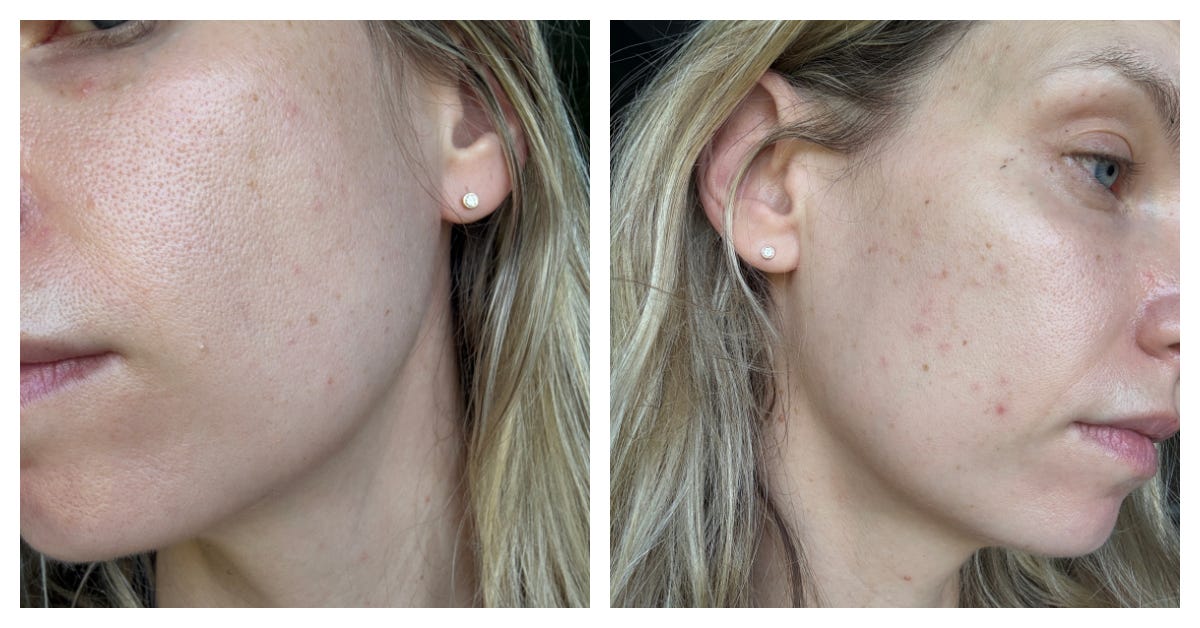
But anyway, there was a full-scale facial revolt that went on during the heat of the heat-iest wave of heatwave (it reached forty degrees on the stone steps at the front of the house), with more and more spots appearing on my face almost as I stared at it in the mirror.
I knew what it was though, because this has happened before: my skin, which loves all types of sunscreen for most of the year, hates chemical sunscreen when the weather is scorching.
If you have no idea what chemical sunscreen is, then it’s the type of SPF that is more the norm - the default type. If your SPF doesn’t say “mineral sunscreen” on the bottle, then it’s most likely a chemical one. They’re usually lighter in texture, absorb more easily and are virtually invisible once applied. Mineral sunscreens tends to be slightly thicker and will more often than not leave a white tint to the skin because of the filters they use, so only a fraction of the sunscreens you see on the shelves tend to be mineral ones.
Some people freak out over these terms, chemical and mineral, imagining that chemical sunscreens are made on an evil despot’s oil rig from things like battery acid, potassium chunks and melted-down litmus strips, and that mineral sunscreens are formulated by fairies at the bottom of the garden using hemp, grass seed and the juice of the baobab tree. But both are made up of chemicals.
Chemical sunscreens work (simplified version because I’m not qualified on the science, I mean I just wrote “juice of the baobab tree”) by absorbing the UV rays whereas mineral filters reflect the UV rays, using zinc oxide or titanium dioxide. (See! Chemicals!)
Anyway, when it gets really really hot my skin seems to break friends with chemical sunscreens. Maybe it’s because everything gets so clogged up (sunscreen is designed to stick around on your skin, so the normal cleansing job sometimes just won’t be enough) but I also think that, for me at least, it’s something to do with the particular ingredients in the chemical sunscreens. They become intolerable to my face. Weirdly not to the rest of my person (though I’ll extend “face” to cover chest as well) but on my visage I get flourishes of spots, sometimes some irritation and, quite often at the same time, really stinging eyes with formulas that previously didn’t sting me.
Weird!
But all is not lost. Here’s what I do - immediately - when my summertime face begins to fall apart.

Ad-info: no paid or sponsored content. Links are affiliate links and some products have been sent as samples with no obligation to feature.
1. Ramp up my cleansing routine.
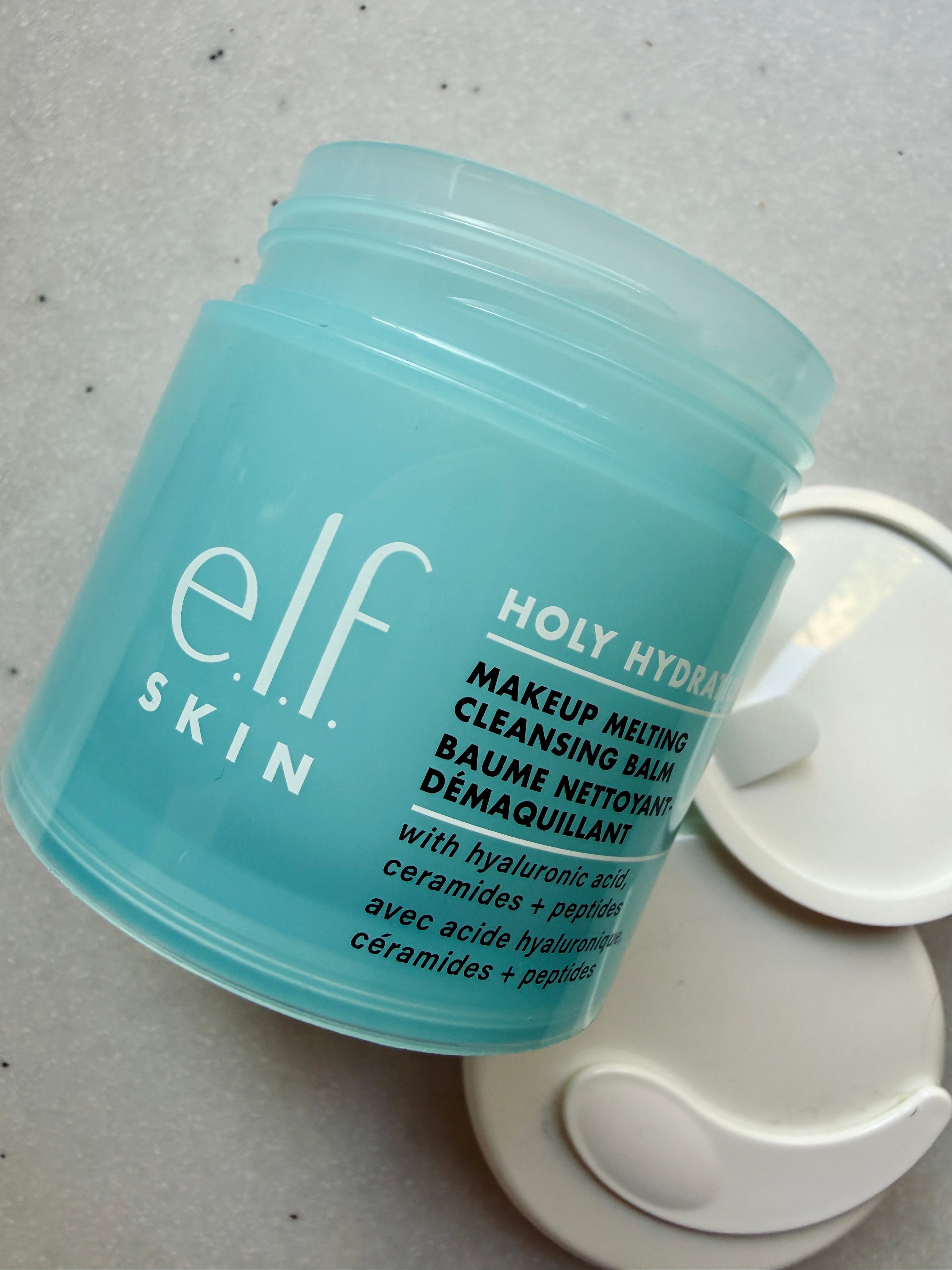
Usually I’m a “cleanse once in the evening because WHY would my face even be dirtying as I sleep?” sort of person, but in the summer, I really up the ante. I use a balm cleanser in the evening (this one from ELF is my current most-used, it’s a steal and has a luxe melting texture and removes mascara as well as everything else) but in the morning I use something splashy and light.
(This hot weather is the only time I will consider hanging my head over a sink and splishy-splashing it, I cannot abide the sensation of water running down my arms or neck, normally, but if it’s boiling outside it’s just about acceptable.)
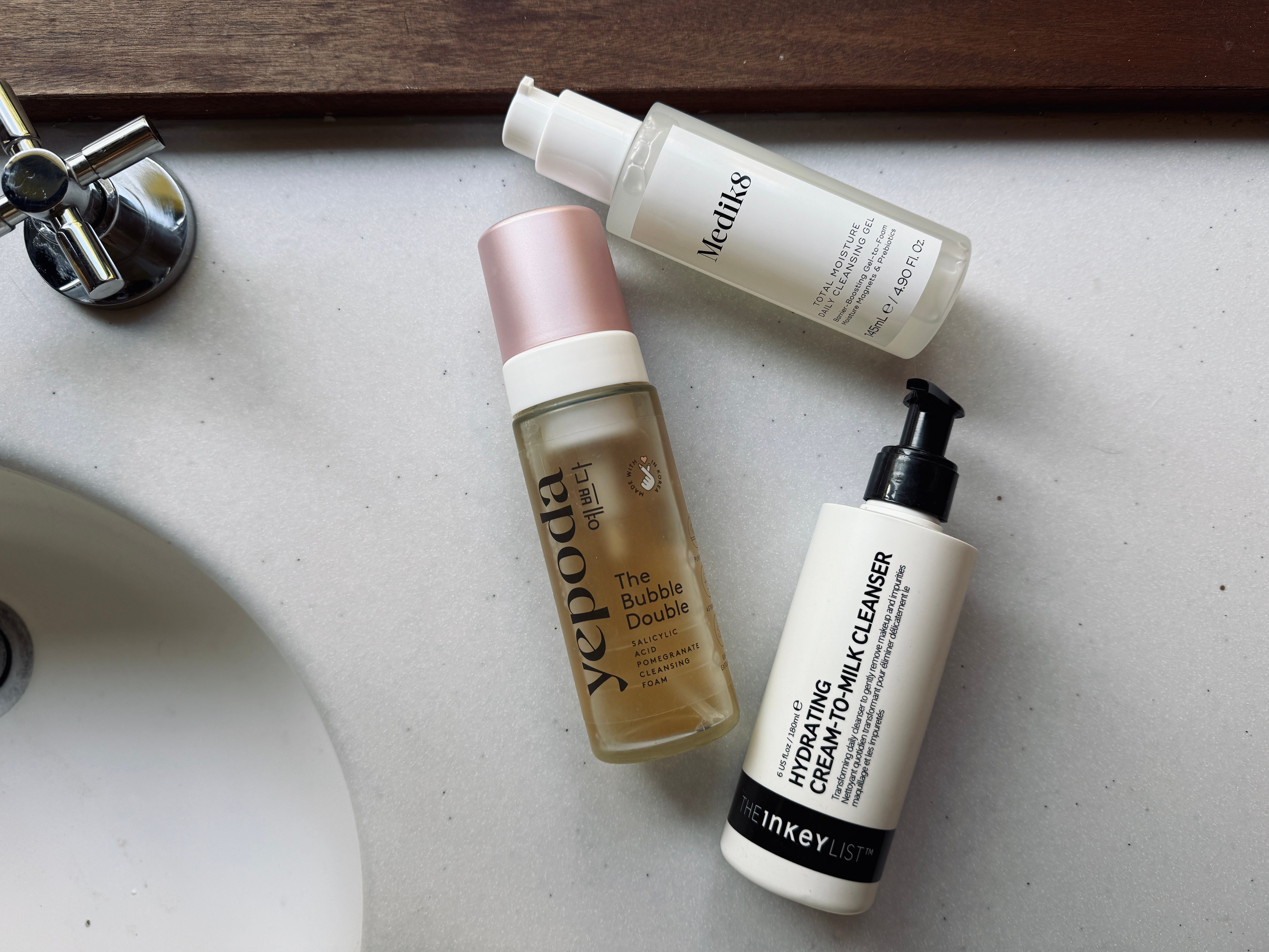
I’ve been using the Medik8 Total Moisture Cleansing Gel in the mornings - it’s deep-cleansing and very refreshing and weirdly far more hydrating than it strictly should be for a product of this type. See also Yepoda Bubble Double, and for something less splashy (more creamy) but still light and fresh, try Inkey’s Cream-to-Milk Cleanser.
2. Introduce a BHA exfoliant.
This one is even more important than the first step. A BHA is a beta-hydroxy acid and it’s a type of exfoliant, but one that is oil-soluble, which means that it can get deep into the pores to keep them clear and unproblematic, making it an amazing solution (or part-solution) for people who experience breakouts and blemishes and blackheads.
I sweep the BHA liquid on after cleansing (thoroughly, balm and flannel!) in the evening, so that I know it’s getting to work overnight. Just tip a little onto a cotton pad and swoosh it over the face, making sure you get the side of the nose and the eyebrows (why the spots in the eyebrows? cruel nature!) and then follow with your usual routine, though I’d give heavy creams a miss.
I go: cleanse, LED mask, BHA, light oil-free moisturiser. Or if it’s my retinoid night (I alternate nights, sounds complicated but isn’t) then I might use the BHA the following morning instead. I don’t like to stack those together. Perhaps I’m too cautious with my skincare routine, but I always think it’s best to go easy and tackle one thing at a time! If you want my full skincare routine (obviously take these tweaks into account!) then it’s here.
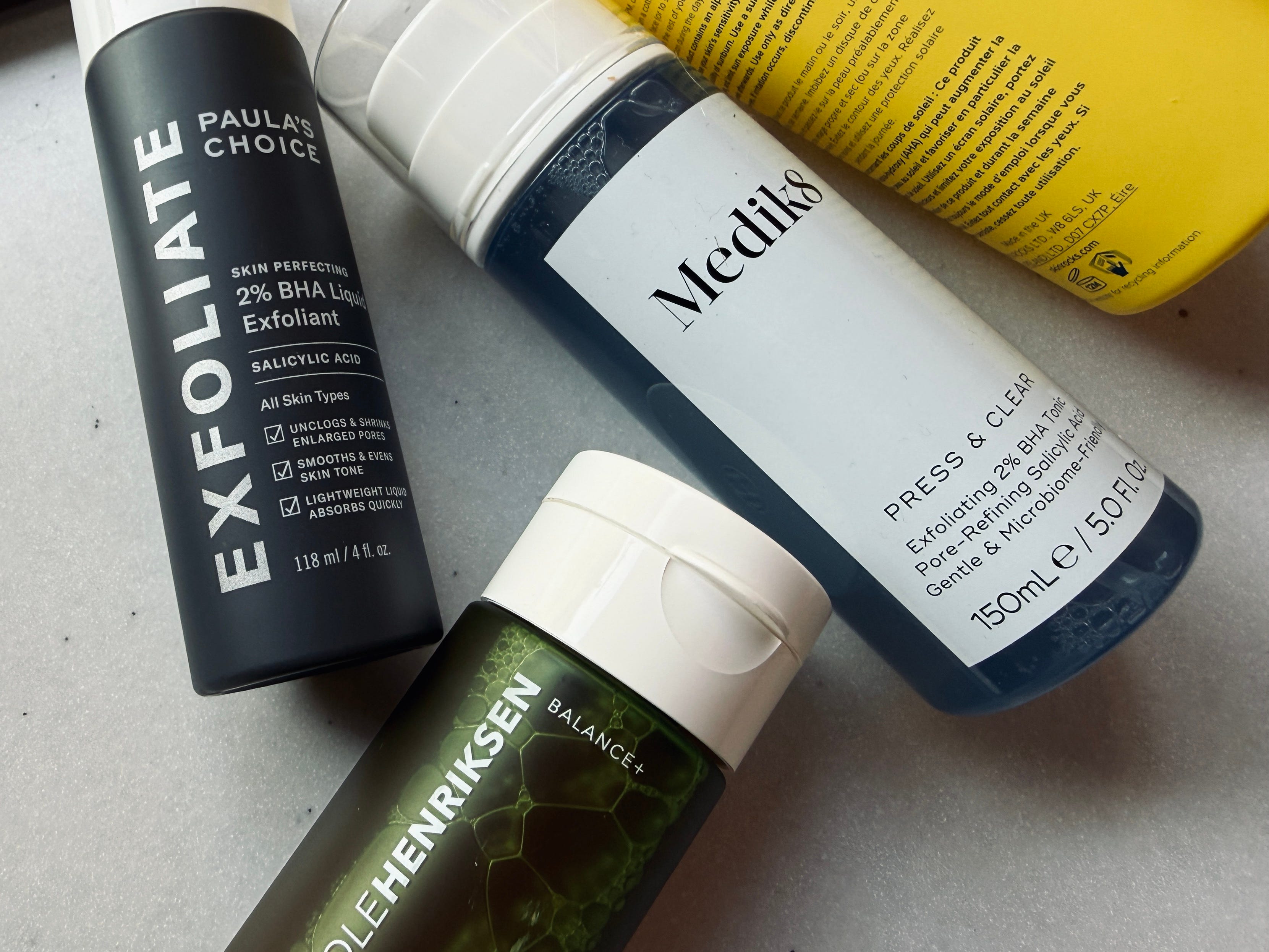
BHA exfoliants I love and trust:
Paula’s Choice BHA 2% Liquid, here
Skin Rocks Control Acid, here
Medik8 Press & Clear, here
Ole Henriksen Detox Drops, here
3. Switch to Mineral SPF
Is this step even more important than step 2? Can’t decide. But it’s a crucial change, because I basically eliminate the entire cause of my woes in one fell swoop by switching from a chemical sunscreen to a mineral one. Why don’t I use a mineral one all year round? Because generally I find them less refined than the chemical ones, which are usually weightless, invisible and a joy to apply.
Mineral SPFs often feel slightly clunky by comparison, texture-wise, but they have some huge benefits. They won’t sting the eyes. They tend to create a good grippy makeup base. And, perhaps most importantly for the purpose of this post, they can be better for those who get spots or irritation. (The downside is that white cast they can leave, but I do think that some of the brands are getting more clever with mineral sunscreens and the way they are formulated.)
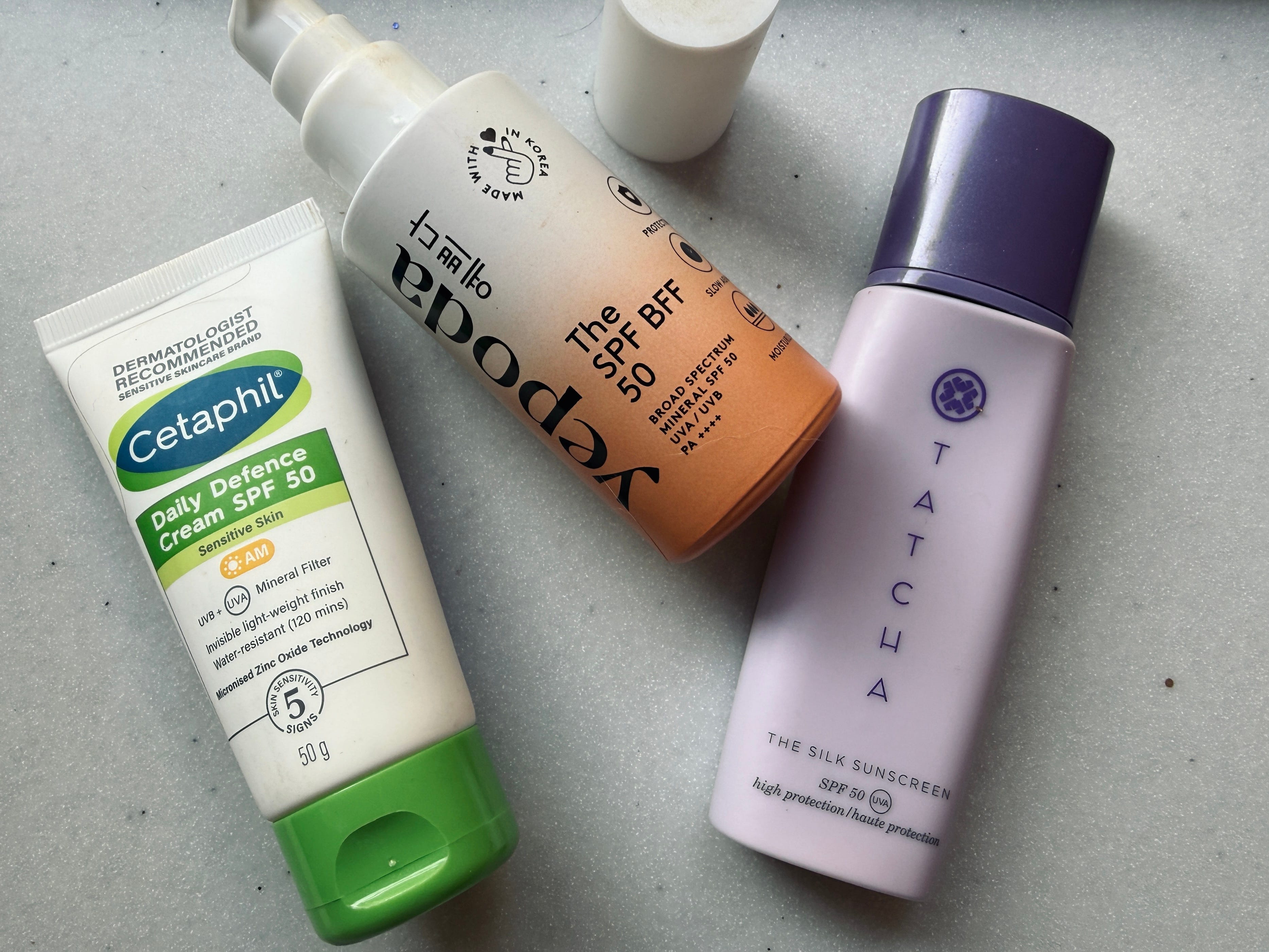
My favourite Mineral SPF of the season so far? Tatcha The Silk Sunscreen. The closest I’ve found to the texture of a silky, lightweight chemical sunscreen. Has added moisturisers and also niacinamide which would be a lovely ingredient to add into the mix anyway if you were having breakouts and redness and so on. Finish is not too matte (which I hate) but equally not shiny-oily feeling. This also seems to have far less of an opaque white cast than others I’ve tried, though obviously I’m relatively fair anyway so my findings here are of limited value.
Just perfect. Oooph, I love it. But not the price-tag, which is a whopping great £65, and unfortunately blows it out of the water for the majority of people. I feel as though some would pay that for a big-name night cream, but when it comes to sunscreen it’s more of a practical purchase rather than a luxury and the majority of people would absolutely balk at it. Does that sound silly? Am I wrong? I’d love this to be more accessible, it’s so beautifully done. Tatcha rarely make anything I don’t instantly fall for, when I think about it, it’s a problem!
(It’s here. I have no discount code other than the SpaceNK new customer one (pops up on the website) but do let me know in the comments if you see any!)
Not quite so silky, but equally not at all horrendously thick, we have Yepoda BFF SPF50. Sits really well under makeup, this one, and costs considerably less than the Tatcha at £24. (Here.) This also has a slight tint, which helps to counteract the white cast.
Cetaphil’s Mineral SPF50 is my newest discovery - grabbed for £11 a couple of weeks ago and tested almost daily since. It actually feels more fluid than either of the above options, in terms of consistency, and spreads quickly and easily over the skin. Does it feel quite so light and delicate once applied? Possibly not, but I think if you started out with the Cetaphil and hadn’t ever laid eyes on the Tatcha then you’d be pretty pleased with it.
I mean, I’ve used it over and over again when I could have been reaching for the others so I’d say that’s a good test. Had I hated it, or found it even slightly upsetting to use then I’d have resigned it to the outbox. No greasiness, gentle on the skin, affordable enough that you’d use it in the right quantities and happily reapply.
I got mine here for £11, I can see it’s usually around £16, still a brilliant price, if you ask me.
So that’s my emergency protocol for when my summer skin won’t play ball. It’s pretty fast-working. You might ask, why the hell do you not just use mineral sunscreen for the entire summer and then you wouldn’t get these problems in the first place?
It’s a fair question. I suppose I get lulled into a false sense of security for months and months where my skin is flawless and the weather is warm and then BAM!
Maybe next year I’ll start my switches in spring…
You have beautiful flawless skin Ruth (normally). The perks of living in the UK and not South Africa 🌞. I have sun damage from my childhood as I am meticulous too. Anyway, I also break out in spots in extreme heat and humidity, from suncream esp if it is water resistant. Thank you for your informative post, now I at last know the difference btw a mineral and chemical suncream. Ps people who think suncream is bad for one, must not talk to me!
I get sunscreen stinging my eyes when it’s hot. Not cheap but I’m signed up to libertys beauty drop. So I use that credit when they have offers to buy more expensive items. Anyway the point I’m getting to is I bought Emma Lewisham sunceutical spf50 mineral face. I love it. It has a tint to it. The pot pumps out the amount you need. It’s also refillable. It’s on offer £43.20 at the moment .